
Pond repair and leak detection
Find where the water goes and fix it, from torn liner to failed seams and settled rock.
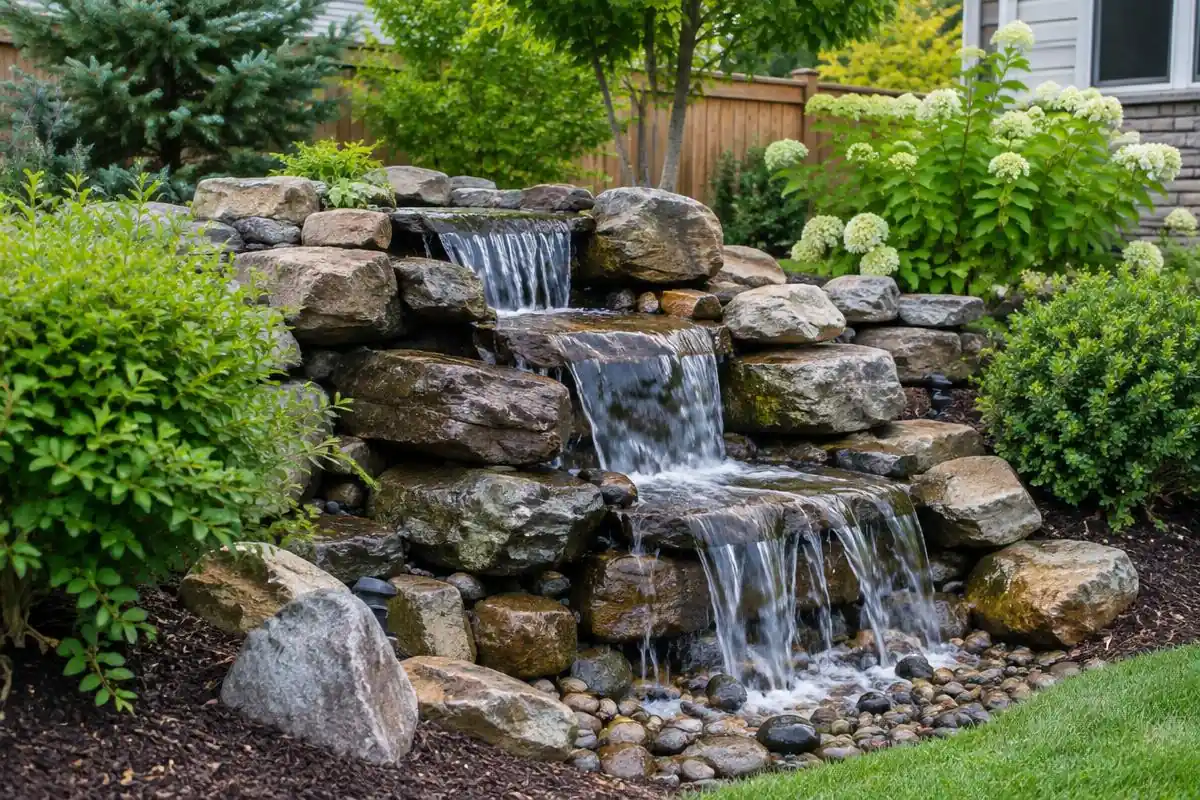
Losing an inch a day is not evaporation. That is a leak, and it is almost always in one of a handful of places.
We isolate the problem step by step. Shut the waterfall down, mark the water line, watch where it stops. That tells us whether the loss is in the pond, the stream, or the plumbing.
Once we find it, we tell you what it takes to fix it before we start.
What the visit includes
- Water loss test to isolate the leak zone
- Liner inspected for tears, punctures, and low edges
- Waterfall and stream seams checked and resealed
- Skimmer and biofalls faceplate gaskets replaced
- Plumbing, fittings, and check valves pressure checked
- Settled rock reset and liner edges raised
- Patch or liner replacement as the repair calls for
- Refill and re-test before we leave
What we look for
Water drops overnight
More than about an inch a week in normal weather points to a leak, not evaporation.
Soggy ground near the pond
A wet strip beside the stream or waterfall usually means water is escaping over or through the liner edge.
Pump runs dry or sucks air
That often means the water level has dropped below the skimmer opening because of a leak upstream.
FAQ
Pond repair and leak detection questions
Service area
We work across Collin County
If your pond is in one of these cities, we can get to it. Not on the list? Call and ask.
Ready for a pond you can actually enjoy?
Tell us what your pond is doing. We will give you a straight answer and a clear price.